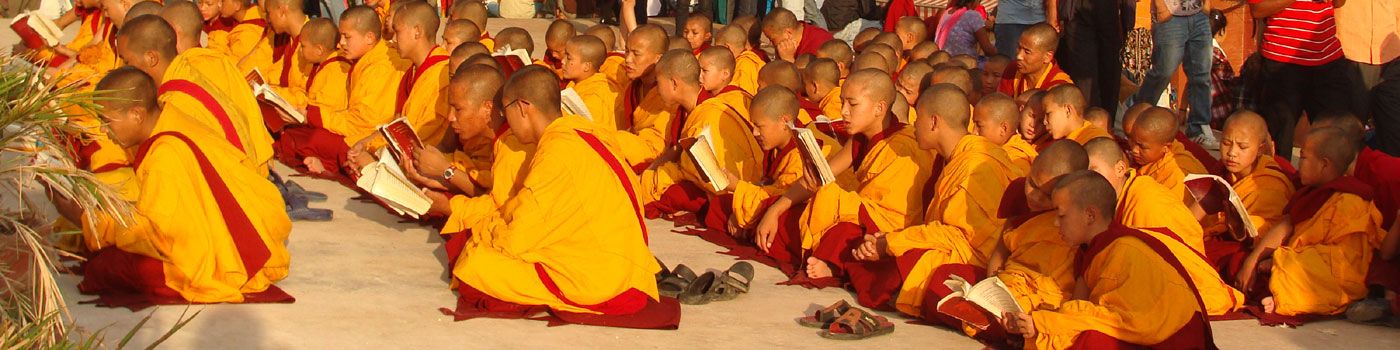
Explore the rich cultural heritage of Kathmandu Valley and the spiritual heart of Lumbini, the birthplace of Siddhartha Gautam (Lord Buddha), on this immersive journey.
Begin your tour in Kathmandu, where you will visit Kathmandu Durbar Square, the ancient palace complex of the Malla and Shah kings. This UNESCO World Heritage site is a treasure trove of temples, courtyards, and historic architecture dating back centuries.
Next, visit the iconic Swayambhunath Stupa (Monkey Temple), a sacred site revered by both Hindus and Buddhists, offering panoramic views of the city and a glimpse into Nepal’s spiritual traditions.
Continue to Bhaktapur, a medieval city that has retained its historic character. Explore traditional streets, temples, and courtyards that transport you back in time.
In the afternoon, travel to Dhulikhel, where on clear days you can enjoy sweeping panoramic views of the Himalayas. Visit Namobuddha, one of the most sacred Buddhist sites in Nepal, known for its serene monasteries and spiritual significance.
The tour continues to Lumbini, where Siddhartha Gautam was born. Lumbini is a UNESCO World Heritage site and a pilgrimage center for Buddhists worldwide, offering an opportunity to connect deeply with Buddhist history and teachings.
On your return, visit Boudhanath Stupa, the largest Tibetan Buddhist stupa in Nepal. Surrounded by monasteries and prayer wheels, it is a vibrant center of Tibetan Buddhism in Kathmandu.
Buddhism has inspired generations across Asia, from King Ashoka’s devotion to the spread of the Buddha’s message across Nepal, India, Bhutan, Tibet, and beyond. Its essence lies in the Four Noble Truths, the Three Jewels (Buddha, Dharma, Sangha), and the Eightfold Path. Lumbini and other sacred sites allow travelers to connect with this rich spiritual heritage.
Outline Itinerary
Price Details.
Please email us at ehtours@explorehimalayatravel.com for the prices or alternatively, you can make a booking inquiry through the booking link on this webpage and we shall revert to you at the earliest possible.
Detail Itinerary.
Upon arrival in the Land of the Himalayas – Nepal, you will be warmly welcomed by our representatives at Tribhuvan International Airport. You will then be escorted to your hotel in Kathmandu for check-in.
The rest of the day is free for relaxation or leisure, giving you time to unwind and prepare for the exciting cultural and spiritual journey ahead.
Overnight stay at the hotel in Kathmandu.
09:30 – 12:30: Kathmandu City & Swayambhunath Stupa
Begin your day exploring Kathmandu Durbar Square, one of the eight UNESCO World Heritage Sites in Kathmandu Valley. This historic square is a vibrant cluster of ancient temples, palaces, courtyards, and narrow streets dating from the 12th to 18th centuries.
Once the royal residence of the Malla and Shah kings, the palace complex hosted important ceremonies, including royal coronations. The area is adorned with elaborately carved wooden windows and panels and houses the King Tribhuvan Memorial Museum and the Mahendra Museum.
Kathmandu Durbar Square remains the social, cultural, and religious heart of the old city, showcasing Nepal’s spectacular legacy of traditional architecture.
Next, visit Swayambhunath Stupa, perched on a hill west of Kathmandu. One of Nepal’s oldest religious complexes, it dates back to the 5th century A.D. The stupa features a dome representing the world, with Buddha’s all-seeing eyes painted on all four sides, symbolizing wisdom and compassion.
The complex includes a variety of shrines and temples, some from the Lichchhavi period, along with a Tibetan monastery, museum, and library. Access the stupa either by climbing the 365-step stairway or via a scenic road around the hill.
14:30 – 17:30: Patan City Sightseeing
In the afternoon, explore Patan (Lalitpur) Durbar Square, one of the oldest Buddhist-influenced cities in the Kathmandu Valley. The square is a fine example of Newari architecture, featuring three main palace courtyards: Mul Chowk, Zundari Chowk, and Keshav Narayan Chowk, with Mul Chowk being the oldest.
The western part of the complex houses multi-sized temples, including the Krishna Temple, Bhimsen Temple, and the Golden Temple (Hiranya Varna Mahavihar).
Patan Durbar Square offers an abundance of religious art, ancient palaces, pagoda temples, stone baths, statues, engravings, and bronze carvings. It is one of seven monument zones in Kathmandu Valley designated as UNESCO World Heritage Sites. The Patan Museum, located in the square, houses exquisite bronze statues and religious objects, some dating back to the 11th century.
Overnight stay at the hotel in Kathmandu.
09:30 – 12:30: Bhaktapur City Sightseeing
Begin your day exploring Bhaktapur (Bhadgaon) Durbar Square, one of the most charming architectural treasures of the Kathmandu Valley. The square showcases the finest medieval arts of Nepal, featuring a harmonious blend of Pagoda and Shikhara-style temples, centered around the 55-Window Palace built of brick and wood.
Highlights include:
Lion Gate and Golden Gate (the entrance to the main courtyard of the 55-Window Palace, built by King Ranjit Malla)
Statues of ancient kings on stone monoliths
Elaborate wood carvings on struts, lintels, tympanums, gateways, and windows
Bhaktapur is also famous for its traditional crafts, including pottery, weaving, painting, masonry, bronze casting, and jewelry making, many of which continue to this day. Visitors can spend hours exploring ancient temples, courtyards, and bustling artisan workshops, soaking in the vibrant Newar culture and traditions.
14:30 – 17:30: Dhulikhel & Namo Buddha Monastery
Travel to Dhulikhel, a small historic town about 32 km southeast of Kathmandu with a rich Newari heritage. Known for its panoramic mountain views, Dhulikhel offers vistas of the Langtang, Dorje Lakpa, Gauri Shankar, Melungtse, and Numbur peaks on clear days.
Dhulikhel has been an important trading center on the ancient Nepal-Tibet route, with a long history of commerce involving salt, gold, and other goods. (Note: mountain views depend on weather conditions.)
From Dhulikhel, visit Namo Buddha, one of the most sacred Buddhist sites in the Kathmandu Valley. According to Jataka stories, this is the exact site where Bodhisattva offered his own flesh to a hungry tigress and her cubs, demonstrating ultimate compassion.
The site houses the Thrangu Tashi Yangtse Monastery, a vibrant center of Buddhist learning and practice. Every year, the Namo Buddha Festival is held in Baisakh (April/May) to commemorate this extraordinary act of selflessness.
Namo Buddha is approximately 40 km from central Kathmandu, and adventurous travelers can also trek from Banepa to Namo Buddha, passing through Panauti and Sanku villages, enjoying scenic landscapes and local culture along the way.
Overnight stay at the hotel in Kathmandu.
09:30 – 12:30: Depart Kathmandu by road for Lumbini. Upon arrival, you will be transferred to your hotel for check-in.
Lumbini, located in the Rupandehi District of Nepal, is the birthplace of Siddhartha Gautama (Lord Buddha) and one of the most sacred sites for Buddhists worldwide. According to the Parinibbana Sutta, Buddha himself identified four major pilgrimage sites:
Birth (Lumbini)
Enlightenment (Bodh Gaya)
First Sermon (Sarnath)
Mahaparinirvana (Kushinagar)
At the time of Buddha’s birth (circa 642 B.C.), Lumbini was a lush garden of shady sal trees, owned by the Shakya and Koliyan clans. Queen Maya Devi, mother of Siddhartha, gave birth while resting under a sal tree during her journey to her parental home in Devadaha. Ancient Pali and Sanskrit texts describe the natural beauty and tranquility of this sacred site, leaving a lasting impression on pilgrims and visitors alike.
The rest of the day is free for leisure, allowing you to absorb the peaceful atmosphere or explore nearby sites at your own pace.
Overnight stay at the hotel in Lumbini.
14:30 – 17:30: Explore the Lumbini Sacred Garden, the spiritual heart of this UNESCO World Heritage site. Designed by Professor Kenzo Tange, the garden is dedicated to peace, spirituality, universal brotherhood, and non-violence, reflecting the teachings of Lord Buddha. Spanning 2.56 sq km, the area features restored monuments, lush greenery, serene ponds, and walking paths, making it an ideal place for reflection and meditation.
The Maya Devi Temple is the centerpiece of Lumbini, marking the exact birthplace of Siddhartha Gautama (Lord Buddha). The current temple has been fully restored and was inaugurated by King Gyanendra on the 2,547th birth anniversary of Buddha.
Inside, visitors can see the archaeological remains of the original temple dating back to the 3rd century B.C. Nearby stands the Ashokan Pillar, erected by Emperor Ashoka to commemorate the Buddha’s birth, as identified by scholars in 1895. Surrounding the temple are remnants of ancient monasteries, stupas, and other sacred structures.
The Eastern Lane of Lumbini hosts a variety of Theravada Buddhist monasteries built by countries across Asia, each reflecting unique architectural styles and spiritual traditions:
Thai Monastery with traditional Thai architecture and stupas
Mahamaya Buddha Bihar (India) by Maha Bodhi Society, Kolkata
Buddha Dharmakarzabha (India) by Buddhist Society of West Bengal
Burmese Monastery (Myanmar) and Lankan Monastery (Sri Lanka)
Bhikshuni Sangha (Nepal), a nunnery inspired by Swayambhu Chaitya and the thirteen-step path to Nirvana
Nepal Vipassana Center, offering meditation practice and instruction
Visitors can stroll along the Eastern Lane, cross the Shanti Deep (Flame of Peace), and experience the serene spiritual atmosphere that embodies “The Foundation of World Peace.”
The Western Lane highlights the spread of Mahayana, Vajrayana, and Lamaism traditions, with monasteries reflecting their native architecture and practices:
Dharmodaya Zabha (Nepal) with Bahal (courtyard), Gumba (monastery), and stupa
Manang Stupa by the Manang Buddhist community
Korean Monastery and guesthouse
China Temple (Tiananmen-style architecture)
Vietnamese Monastery
French and Austrian Monasteries with meditation guesthouses
Japanese Monastery (Buddhists from Ladakh, India)
German Monasteries
The Western Zone demonstrates the diverse global contributions to Buddhist practice and offers visitors a unique meditation experience amid Lumbini’s spiritual environment.
Overnight stay at the hotel in Lumbini.
After your stay in Lumbini, you have two options for returning to Kathmandu:
Drive back to Kathmandu via the East-West Highway, a journey of approximately 8–9 hours under normal road conditions. Enjoy the changing landscapes of the Terai and mid-hills along the way, witnessing rural life, small towns, and lush scenery.
For a quicker return, drive from Lumbini to Bharatpur Airport (approximately 1 hour) and take a short domestic flight to Kathmandu (around 35 minutes). This option is ideal for travelers who prefer to save time or avoid a long road journey.
Upon arrival in Kathmandu, our representatives will escort you to your hotel or the International Airport for your onward journey, depending on your travel plans.
Overnight stay in Kathmandu (if returning to the hotel) or transfer to airport for departure.
09:30 – 12:30: Explore Boudhanath Stupa, one of the largest and holiest Buddhist sites in Nepal. Known for its all-seeing Buddha eyes, the stupa is an iconic symbol of Nepal and a center of Tibetan Buddhism. The squiggle between the eyes represents the Sanskrit numeral one, symbolizing the unity of all things.
At the base of the stupa, 108 copper prayer wheels are inscribed with the Tibetan mantra “Om Mani Padme Hum”, while a surrounding brick wall displays images of meditational Buddhas, creating a spiritually immersive experience.
Often called “Little Tibet”, Boudhanath is surrounded by Tibetan monasteries, shops, and cafes, offering visitors a chance to observe traditional Tibetan lifestyle in Nepal. As a UNESCO World Heritage Site, it is one of the most important and captivating destinations in the Kathmandu Valley, not to be missed by travelers seeking culture, spirituality, and history.
The rest of the day is free for leisure or personal exploration.
Overnight stay in Kathmandu.
After breakfast, enjoy leisure time to relax, shop, or explore the surroundings at your own pace.
When it’s time for your onward journey, our representative will escort you to Tribhuvan International Airport in Kathmandu for your departure flight.
End of Tour.


