
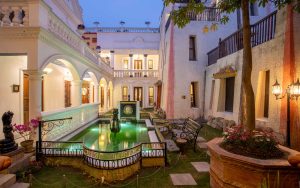
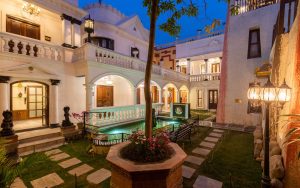
Baber Mahal Villas is a boutique heritage hotel located in the historic Babar Mahal complex, once the residence of Babar Shamsher Jang Bahadur Rana, son of Prime Minister Chandra Shamsher Rana. After the unification of Nepal in 1768 by King Prithvi Narayan Shah, the Rana dynasty ruled the country for 107 years, leaving behind a legacy of grand architecture, luxury, and culture.
Today, Baber Mahal Villas preserves this rich history while offering guests a luxurious and immersive stay in the heart of Kathmandu Valley.
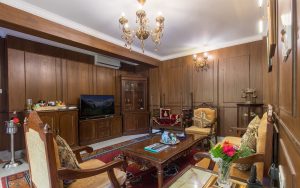
The property combines elements from Newar, Mustang, and Terai architectural styles, showcasing four distinct styles within the complex. Guests can experience the elegance of the Rana era with modern comforts, personalized service, and attention to detail.
Every corner of the villas reflects the lifestyle of Nepal’s most influential ruling family, providing a unique glimpse into Nepalese history.
Within the same complex, Hotel Kaze Darbar offers a heritage boutique experience. Originally built during the Rana period, the hotel has been carefully renovated to preserve its European neoclassical design while providing modern comforts.
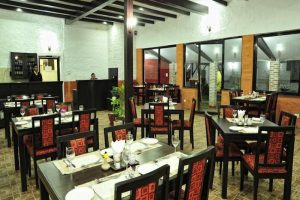
Darbar Restaurant & Bar serves a diverse menu, from traditional Nepali dishes to Japanese and Western cuisine. Organic vegetables are sourced from the hotel’s own farm. Guests can also enjoy homemade cakes, organic coffee, and a selection of Japanese sake — all crafted to reflect the warmth of Nepalese hospitality.
Baber Mahal Villas is an excellent example of Rana-era architecture. Its construction blends traditional methods with lessons learned from the 1934 Nepal-Bihar earthquake, ensuring durability and comfort. Thick brick, mud, and wood walls keep rooms warm in winter and cool in summer. The terracotta-tiled roof is both historically accurate and environmentally friendly.
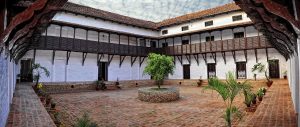
Many bricks bear inscriptions from past prime ministers, including Juddha Shamsher (1932–1945) and Bir Shamsher (1885–1901), highlighting the property’s rich historical lineage. The layout, main courtyard, and design all preserve the grand residential style of the Rana period.
Guests at Baber Mahal Villas and Hotel Kaze Darbar can:
Immerse themselves in Nepalese history and culture
Enjoy luxury accommodations in a heritage setting
Taste organic, locally sourced cuisine
Witness the architectural brilliance of the Rana era
Whether visiting Kathmandu for leisure, culture, or a romantic getaway, Baber Mahal Villas offers a perfect blend of heritage, luxury, and comfort, making every stay memorable.
Outline Itinerary
Price Details.
For more information on price, please email us at ehtours@explorehimalayatravel.com or alternatively, you can make a booking inquiry through the booking link on this webpage and we shall revert to you soon thereafter!
Detail Itinerary.
On arrival at the Airport, Our Representative will welcome you and transfer to the Hotel
Check in at the Hotel. Rest of the day at leisure for own independent activities
Lunch & Dinner – Own arrangement
Overnight at Hotel in Kathmandu
Listed as one of the UNESCO Cultural World Heritage Sites, Kathmandu Durbar Square is a remarkable complex of ancient palaces, temples, courtyards, and historic streets, dating from the 12th to 18th centuries. Located in the heart of the old city, the square has long been the social, religious, and political center of Kathmandu.
The palace complex served as the royal residence of Nepalese kings until the 19th century and was the site of important royal ceremonies, including coronations. The architecture is renowned for its intricately carved wooden windows, doors, and panels, showcasing the finest examples of traditional Newar craftsmanship. Within the complex are the King Tribhuvan Memorial Museum and the Mahendra Museum.
As the place where Nepal’s kings were once crowned and legitimized (“durbar” meaning palace), Kathmandu Durbar Square remains the historic heart of the city and one of Nepal’s most iconic architectural treasures.
Perched atop a hill west of Kathmandu, Swayambhunath Stupa is one of the oldest and most sacred Buddhist sites in Nepal, dating back to the 5th century AD. The stupa’s white dome represents the world, while the all-seeing eyes of Buddha on all four sides symbolize wisdom and compassion, watching over the valley below.
The Swayambhunath complex includes ancient shrines and temples from the Lichchhavi period, along with a Tibetan monastery, museum, and library added in later years. Visitors can reach the stupa either by climbing the famous 365-step stairway from the east or by driving around the hill to the southwestern entrance. The panoramic views of Kathmandu Valley from the top make this site especially memorable.
The Narayanhiti Palace Museum is the former royal palace of Nepal, centrally located in Kathmandu. It once served as the primary residence of the country’s monarchs and is now preserved as a museum open to the public.
The name Narayanhiti comes from “Narayan”, a form of Lord Vishnu whose temple stands opposite the palace, and “Hiti”, meaning a traditional water spout located near the palace entrance. The palace complex, enclosed by compound walls, occupies a prominent area in north-central Kathmandu.
The present palace was built in 1970 in a contemporary pagoda-style design, replacing the older palace from 1915. Constructed on the occasion of the marriage of King Birendra Bir Bikram Shah, the palace covers approximately 30 hectares (74 acres) and provides insight into Nepal’s modern royal history, state ceremonies, and lifestyle.
The National Museum of Nepal (Rashtriya Museum) is the largest and oldest museum in the country, established over a century ago. Located in Kathmandu, it plays a vital role in preserving Nepal’s archaeological, cultural, and military heritage.
The museum is best known for its extensive collection of historical weapons from the 18th and 19th centuries, as well as sculptures, paintings, murals, coins, and artifacts that reflect Nepal’s artistic and cultural traditions.
The museum complex consists of three main buildings:
These exhibits together provide a comprehensive understanding of Nepal’s history, culture, and evolving traditions.
After completing the sightseeing tour, you will be transferred back to your hotel in Kathmandu.
Breakfast at the hotel
In the morning, enjoy a half-day sightseeing tour of Patan City (Lalitpur), visiting Patan Durbar Square, the Golden Temple, and Patan Museum—three of the most important cultural landmarks in the Kathmandu Valley.
Patan Durbar Square is one of the three Durbar Squares of the Kathmandu Valley, all designated as UNESCO World Heritage Sites. The square is home to the ancient royal palace of the Malla kings of Lalitpur and is considered a masterpiece of Newar architecture.
The square is paved with traditional red bricks and surrounded by beautifully crafted temples, shrines, and stone idols. Most of the main temples are aligned opposite the western façade of the palace. The area also features traditional Newari residential houses, reflecting the living heritage of the city.
Patan is one of the oldest known Buddhist cities in Nepal and a major center of both Hinduism and Buddhism, with 136 bahals (courtyards) and 55 major temples, many of which are located around the Durbar Square.
Also known as Hiranya Varna Mahavihara, the Golden Temple is a remarkable Buddhist monastery located just north of Patan Durbar Square. According to legend, the monastery was founded in the 12th century, with the earliest historical record dating back to 1409.
Visitors are required to remove shoes and leather items before entering the inner courtyard. Inside, sacred tortoises, regarded as temple guardians, can be seen roaming freely. A unique tradition of the temple is that the main priest is a boy under the age of twelve, who serves for only 30 days before being replaced.
The three-tiered structure features a copper-gilded façade, with a beautiful statue of Shakyamuni Buddha in the main shrine. The courtyard also houses a statue of Vajrasattva adorned with a silver-and-gold cape and a richly decorated central shrine with an ornate golden roof and gajur. The oldest part of the temple contains a self-arisen chaitya, adding to its spiritual significance.
Patan Museum, located within Patan Durbar Square, is one of the finest museums in South Asia and a part of the UNESCO World Heritage Site. It was inaugurated in 1997 by Late King Birendra Bir Bikram Shah.
The museum is housed in Keshav Narayan Chowk, a former residential palace of the Malla kings dating back to 1734. The site stands on even older foundations believed to originate from the Licchavi Period (3rd–9th century).
Patan Museum is renowned for its outstanding collection of traditional sacred art of Nepal, displayed in a beautifully restored architectural setting. Its gilded doors and windows open onto one of the most elegant palace courtyards in the Kathmandu Valley.
After completing the sightseeing tour, return to the hotel. The rest of the day is free for leisure.
Meals: Lunch & Dinner – own arrangement
Overnight: Hotel in Kathmandu
Bhaktapur Durbar Square is one of the most impressive architectural showpieces of the Kathmandu Valley and a designated UNESCO World Heritage Site. The square showcases some of the finest examples of medieval art and architecture in Nepal, with an exquisite blend of pagoda and shikhara-style temples surrounding the iconic Fifty-Five Window Palace, built of brick and intricately carved wood.
The square is a living open-air museum where statues of ancient kings stand atop stone monoliths, guardian deities watch over their sanctuaries, and masterful wood carvings decorate every corner—from struts and lintels to gateways and windows—creating a harmonious architectural ensemble.
Key attractions within Bhaktapur Durbar Square include the Lion Gate, the magnificent Golden Gate, and the royal statues carved in stone. The Golden Gate, erected by King Ranjit Malla, served as the grand entrance to the main courtyard of the Fifty-Five Window Palace and is considered one of the finest works of art in Nepal.
Bhaktapur is also renowned for preserving its traditional crafts and medieval industries, many of which are still practiced today. These include pottery, weaving, wood carving, stone masonry, bronze casting, and jewelry making. Over centuries, the city has earned a reputation for the exceptional quality of its craftsmanship.
Rich in Hindu and Buddhist heritage, Bhaktapur is filled with ancient temples, palaces, and courtyards where visitors can spend hours—or even days—immersing themselves in the culture, traditions, and daily life of the Newar community.
After completing the sightseeing tour, return to your hotel. The remainder of the day is free for leisure.
Meals: Lunch & Dinner – own arrangement
Overnight: Hotel in Kathmandu
Leisure till departure Normal Check out time 1200 hrs.
Our representative will escort you to the International Airport for onward destination.


