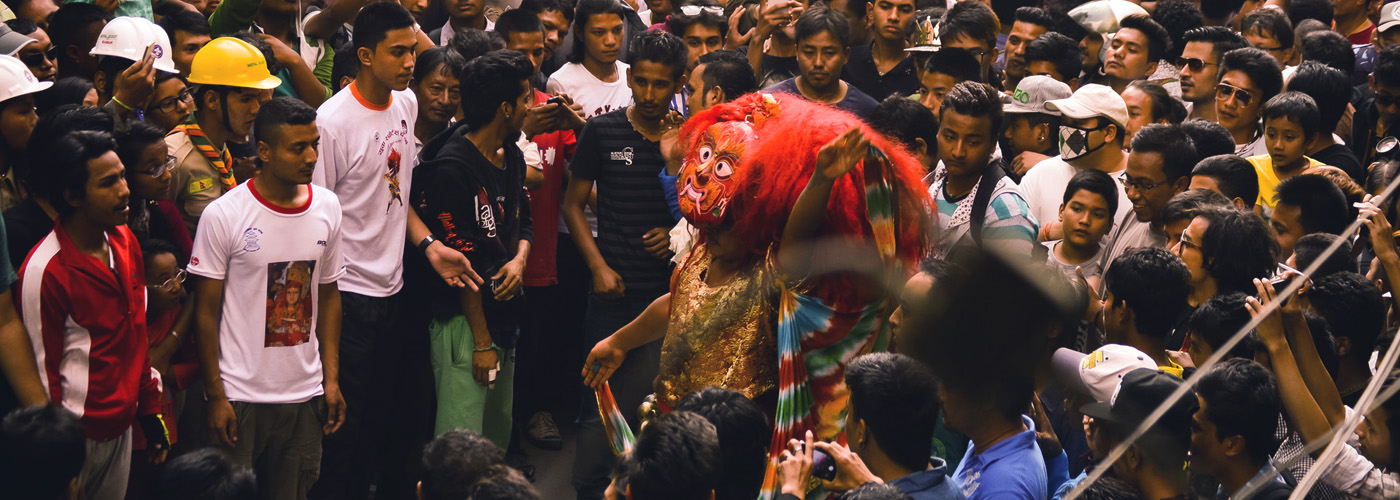
Nepal Festival Tour offers a unique way to explore the culture of Nepal. The country is home to more than 60 ethnic groups. Each group has its own language, customs, and festivals.
Because of this diversity, Nepal celebrates festivals all year round. Whenever you visit, you can experience a special event.
A Nepal Festival Tour allows you to witness colorful religious festivals and traditional jatras. In many towns, celebrations take place almost every day. As a result, streets come alive with music, dance, and rituals.
Most festivals follow the lunar calendar. Therefore, the dates change every year. For travelers, this makes each journey different and exciting.
Festivals in Nepal are closely connected to religion. However, they are also important social events. Both Hindu and Buddhist traditions influence these celebrations. Because of this harmony, communities celebrate together with joy and respect.
In addition, many fairs and ceremonies include family gatherings. People share food, stories, and blessings during these occasions.
Music plays a central role in every Nepal Festival Tour. Weddings, temple fairs, and public celebrations include traditional songs and instruments. Moreover, dancing and cultural performances add energy to every event.
Even today, people celebrate festivals the same way they did hundreds of years ago. As a result, traditions remain authentic and meaningful.
Experience year-round cultural festivals
See vibrant religious celebrations
Enjoy traditional music and dance
Discover diverse ethnic communities
Travel in any season
In conclusion, a Nepal Festival Tour is more than sightseeing. It is a cultural journey filled with color, faith, and celebration.
Gai Jatra, also known as the Festival of Cows, is one of Nepal’s most vibrant and meaningful cultural celebrations. Observed annually in Bhadra (August/September), this unique festival blends remembrance, religious tradition, satire, and lively street performances.
Celebrated mainly in the Kathmandu Valley, Gai Jatra reflects Nepal’s deep-rooted spiritual beliefs and the rich heritage of the Newar people.
Historically, Gai Jatra began as a ritual dedicated to Yamaraj, the Hindu God of Death. The festival helped grieving families accept the reality of death while praying for the safe journey of departed souls to the afterlife.
The modern form of Gai Jatra developed during the medieval Malla period of Nepal. Pratap Malla, the King of Kathmandu, is credited with introducing humor, parody, and satire into the festival.
According to legend, after the death of his son, the king’s queen was overwhelmed with grief. To comfort her, King Pratap Malla invited families who had also lost loved ones to join a procession and encouraged comic performances so she could see that many others shared her sorrow.
During his reign, the king also built the historic Rani Pokhari, a large pond with a temple at its center, which remains an important landmark in Kathmandu today.
One of the most important traditions of Gai Jatra involves families who have lost a loved one during the past year.
They participate in a public procession, traditionally leading a cow through the streets. In Hindu belief, the cow helps guide the departed soul safely to the afterlife.
If a real cow is unavailable, a young child dressed as a cow represents the sacred animal.
Over time, the festival evolved into a vibrant public celebration featuring:
Cows and children dressed in colorful costumes
Satirical performances and street comedy
Social commentary and parody
Community gatherings and cultural displays
This unique blend of grief, humor, and celebration makes Gai Jatra one of Nepal’s most distinctive festivals.
Processions of cows and children in creative costumes
Cultural performances and public satire
Commemoration of loved ones who passed away
Celebrations throughout the Kathmandu Valley during August or September
Unlike many festivals that focus purely on celebration, Gai Jatra transforms mourning into communal healing. By combining remembrance with humor and satire, the festival allows people to cope with loss while strengthening social bonds within the community.
For visitors to Nepal, experiencing Gai Jatra offers a rare opportunity to witness a tradition that beautifully balances spirituality, history, and lively street culture.
Bisket Jatra is one of the most exciting and dramatic festivals in Nepal. Celebrated every April, it marks the Nepali New Year with chariot processions, ancient rituals, and vibrant street celebrations. Thousands of locals and visitors gather to witness this unique cultural event.
Held in Bhaktapur, the festival transforms the historic city into a powerful display of tradition, devotion, and community spirit.
A nine-day festival rooted in Newar culture. The name is believed to come from the Newari words “Bi” (snake) and “Syaku” (laughter), referring to a local legend involving sacred serpents.
Unlike many other festivals in Nepal, this festival is known for its dramatic public participation. The celebration combines mythology, religious rituals, and intense neighborhood competition.
This festival lasts for nine days and includes several important ceremonies. One of the key rituals is the raising of ceremonial poles, symbolizing mythological serpents and the arrival of a new year.
However, the highlight of the festival is the massive chariot procession.
The chariot procession is the most anticipated part of the festival. Large wooden chariots carrying deities are pulled through narrow streets by teams of locals.
As the chariot moves through the city, the event often turns into a competitive tug-of-war between neighborhoods. Crowds cheer, drums beat, and the atmosphere becomes intense. This dramatic tradition makes this one of Nepal’s most thrilling festivals.
Bisket Jatra is more than a festival. It symbolizes renewal, unity, and fresh beginnings. For the Newar community. It preserves centuries-old traditions and strengthens social bonds.
At the same time, the festival offers visitors a rare opportunity to experience living heritage in an authentic setting.
Experience traditional Newar rituals
See dramatic chariot pulling competitions
Celebrate the Nepali New Year
Explore the cultural richness of Bhaktapur
Every year, it attracts travelers seeking a deeper understanding of Nepalese culture.
Bisket Jatra stands out as one of Nepal’s most vibrant cultural celebrations. With its legendary chariot procession, symbolic rituals, and New Year significance, it offers an unforgettable experience for anyone visiting Nepal in April.
Experience the excitement of Bisket Jatra and welcome the Nepali New Year surrounded by the vibrant culture, traditions, and historic beauty of Bhaktapur.
The Indra Jatra Festival in Nepal is one of the most vibrant and important celebrations in Kathmandu. This eight-day festival honors Lord Indra, the ruler of heaven and the god of rain, clouds, and storms.
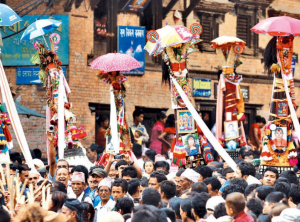
The festival begins on Bhadra Dwadsahi and ends on Ashwin Krishna Chaturdashi according to the lunar calendar. Therefore, it usually falls in September or October in the Gregorian calendar. During this time, the streets of Kathmandu come alive with chariot processions, masked dances, and religious rituals.
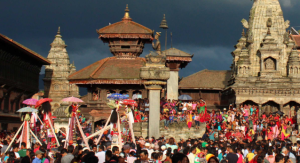
According to legend, Lord Indra once disguised himself as a mortal to collect the sacred parijata flower. However, local people caught him while he was picking the flower and imprisoned him.
To remember this story, an image of Indra with outstretched arms, tied like a thief, is displayed in city squares during the festival. Meanwhile, a white elephant — believed to be Indra’s vehicle — roams the streets searching for its master.
The legend also says that Indra’s mother came to Earth to secure his release. In return, she promised to bless the valley with fog and dew. She also assured that departed souls would safely reach heaven. The Dagini procession represents this powerful story of protection and blessing.
The Indra Jatra Festival in Nepal is famous for its traditional mask dances. Throughout the city, performers dressed as Lakhe, Bhairav, and other deities entertain both locals and visitors.
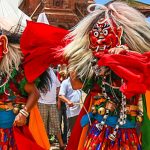
Among them, Bhairav, the fierce form of Lord Shiva, receives special worship during the celebration. These dances not only entertain but also preserve centuries-old Newari culture and tradition.
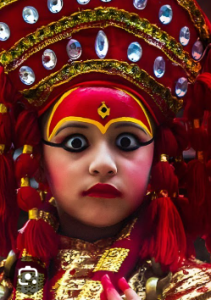
One of the main highlights of the Indra Jatra Festival in Nepal is Kumari Jatra. During this grand procession, the living goddess Kumari is taken through the streets in a beautifully decorated chariot.
She is accompanied by chariots of Bhairav and Ganesh. Thousands of devotees gather to receive her blessings. This sacred event beautifully reflects the deep spiritual and cultural identity of Kathmandu Valley.
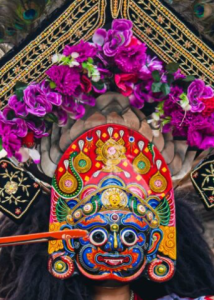
Indra Jatra is more than a religious festival. It is a celebration of faith, history, art, and community spirit. Visitors can experience:
Ancient Newari traditions
Colorful mask dances
Sacred chariot processions
Unique living goddess culture
Authentic cultural heritage of Nepal
If you want to witness Nepal’s living traditions at their finest, the Indra Jatra Festival in Nepal offers an unforgettable cultural experience.