
The Nepal Cultural and Adventure Tour offers a complete travel experience across Nepal’s most iconic destinations. Over 10 nights and 11 days, you will explore Kathmandu, Chitwan, Pokhara, and Lumbini.
This journey blends heritage sites, wildlife encounters, scenic landscapes, and spiritual discovery.

Start your journey in Kathmandu, where ancient traditions meet daily life. Walk through historic squares and lively local markets.
Key highlights include:
Learn more about these UNESCO sites on the UNESCO official website.
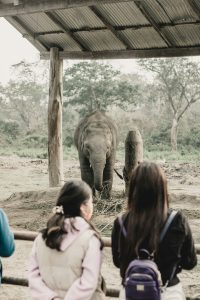
Travel to Chitwan for an exciting jungle experience. A visit to Chitwan National Park offers opportunities to see rare wildlife in their natural habitat.
You may encounter:
For park details and conservation efforts, visit the Department of National Parks and Wildlife Conservation.

Continue to Pokhara, known for its tranquil setting and adventure activities.
Top experiences:
Pokhara is ideal for both relaxation and outdoor adventure.
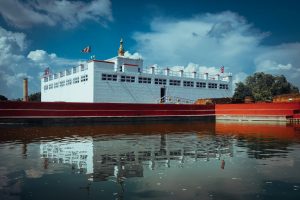
Your journey continues to Lumbini, one of the most important spiritual sites in the world. It is the birthplace of Siddhartha Gautama.
Important sites include:
To understand Buddhist philosophy, you can explore resources from the Buddhist Society.
This itinerary combines multiple travel experiences into one journey:
The route is well-paced, making it suitable for first-time visitors to Nepal.
If you are planning a trip, check visa and travel information from the Nepal Tourism Board.
The Nepal Cultural and Adventure Tour is ideal for travelers seeking diversity in one itinerary.
Outline Itinerary
Price Details.
For more information on price, please email us at ehtours@explorehimalayatravel.com or make a booking from the booking link on this webpage and we shall revert to you soon thereafter.
Detail Itinerary.
A traditional Himalayan Khada welcome awaits you at Tribhuvan International Airport.
Check in to your luxurious room which shall be provided with welcome amenities.
12:30-13:30 hours: Lunch own arrangement
Rest of the day: Relax and unwind by taking a stroll around the historic town of Kathmandu or warm up with the fun filled lively streets of Thamel for some of the most interesting multicultural exposure or relax leisurely at your hotel.
20:30-21:30 hours: Dinner Own arrangement
Overnight at Hotel in Kathmandu
07:00- 08:00 hours: Breakfast in Hotel
09:30- 12:30hours: Half day Sightseeing tour of Swayambhunath and Boudhanath Stupa
SWAYAMBHUNATH STUPA
Swayambhunath is situated on the top of a hill west of Kathmandu. It is one of the most popular, holy and instantly recognizable Buddhist temple of Nepal. The Swayambhunath Stupa is one of the oldest religious complexes in Nepal; dating back to the 5th century A.D. Swayambhunath Stupa has a shape of a dome standing on a base which represents the entire world. A pair of big eyes on each side of the dome symbolizes Wisdom and Compassion. They are, in fact, Buddha’s eyes give the impression as if he is looking right into you no matter where you stand. The Swayambhunath complex consists of a stupa, a variety of shrines and temples, some dating back to the Lichchhavi period. A Tibetan monastery, museum and library are more recent additions. The site has two access points: a long stairway, claimed to have 365 steps, leading directly to the main platform of the temple, which lies in the east direction; and the other way to reach the temple is via a road trip around the hill leading to the southwest entrance.
BOUDHANATH STUPA
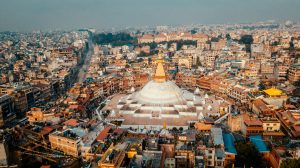
This stupa that is situated 11km/7 miles from Kathmandu City is one of the biggest and holiest Buddhist site in Nepal. It stands with four pairs of eyes in the four cardinal direction keeping watch for righteous behavior and human prosperity. The squiggle between the eyes is the Sanskrit numeral one, symbolizing the unity of all things. This Buddhist Stupa is believed to have been built by King Man Deva as per the advice of the Goddess Mani Jogini. It is built on an octagonal base. Prayer wheels at the base of the temple are inscribed with the Tibetan mantra ‘Om Mani Padme Hom’. At ground level there is a brick wall with 108 images of meditational Buddha inset behind copper prayer wheels. Sometimes referred to as “Little Tibet”, Boudhanath is still the best place in the Kathmandu Valley to observe traditional Tibetan lifestyle. The shrine is surrounded by houses of Lamas or Buddhist priests .There are various Tibetan monasteries surrounding Boudhanath Stupa as it is the focal point of Tibetan Buddhism in Nepal. Boudhanath is a UNESCO world heritage site, and a destination not to be missed while traveling in Nepal.
1230-1330 hours: Lunch own arrangement
Rest of the day: Relax and unwind by taking a stroll around the historic town of Kathmandu or warm up with the fun filled lively streets of Thamel for some of the most interesting multicultural exposure or relax leisurely at your hotel.
20:30-21:30 hours: Dinner Own arrangement
Overnight at Hotel in Kathmandu
0700- 0800 hours: Breakfast at the hotel in Kathmandu
0930-1530 hours: Half day sightseeing tour of Dhulikhel visiting Namo Buddha Monastery
NAMO BUDDHA (Thrangu Tashi Yangtse Monastery)
Namo Buddha is one of the sacred Buddhist sites of Kathmandu valley. On the basis of the Jataka stories, the Buddhist pilgrims believe that this is the exact site where in the distant past Bodhisattva sacrificed his own flesh and blood to a hungry tigress and her five cubs demonstrating his great compassion. To commemorate this extraordinary example of supreme sacrifice, the Namo Buddha festival is held every year in the month of Baisakh (April/May).Namo Buddha is about 40km away from the heart of Kathmandu city. It is in Kavre District in the southeast of the valley.
OR
You can also Hike from Panauti to Namo Buddha. For which you will have to start your day early and drive to Panauti (drive approx 1 ½ hours) and start hiking to Namo Buddha (approx 3 ½ hours). After reaching Namo Buddha, sightseeing (1-1 ½ hours) and drive back to Kathmandu (approx 1 ½ hours)
1230-1330 hours: Lunch own arrangement
Rest of the day at leisure
2030-2130 hours: Dinner Own arrangement
Overnight at the Hotel in Kathmandu
08:00-09:00 hours Breakfast in Hotel.
Departure transfer by road to Pokhara via Prithvi Highway approximately 200 km from Kathmandu. It might take around 06/07 hrs under normal road condition. On your way, you will pass by the banks of Trishuli River, villages, cultivated fields, picturesque landscape and snow-capped Himalayan peaks. Upon arrival, transfer to the hotel.
1230-1330 hours: Lunch own arrangement
PHEWA LAKE: Boating at Phewa Lake: (1 hour)
Phewa Lake is the most popular destination for travelers wanting to indulge in recreational boating. It is the second largest lake in Nepal and measures roughly 1.5 by 4 kms. Renting a boat for a couple of hours and heading out to the middle or the other side of the lake bordering the forested hill can be of interest for travelers. Boats can be rented for the whole day, or on hourly basis. You can either row around yourself or hire a boatman. There is a small island in the lake with a temple dedicated to Barahi where devotees boat down to offer prayers.
Rest of the day at leisure
2030-2130 hours: Dinner Own arrangement
Overnight at the Hotel in Pokhara
08:00-09:00 hours Breakfast in Hotel.
0930-1530 hours: Full day sightseeing tour of Pokhara city.
1230-1330 hours: Lunch own arrangement
POKHARA
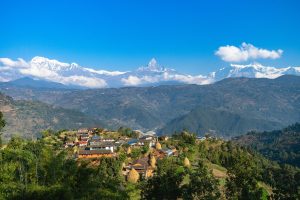
The beautiful and rare combination of snow-clad peaks and snow fed lakes and rivers has helped to make the valley of Pokhara (210kms/131 miles from Kathmandu valley) one of the most picturesque natural attractions in the whole wide country. It is located virtually in the geographical center of Nepal. Located on the main road between Kathmandu and Bhairahawa, there may be no other place in the world from where Great Himalayas peaks can be admired from such a close distance. The Bindhyavasani Temple on its well-kept platform overlooks a modest amusement park. Phewa Lake, skirted by a large numbers of unpretentious lodges and simple restaurants, is the most congenial spot for visitors. Other Highlights of Pokhara are: Bungee jump, Zip Flying, Paragliding, Ultra-light flight. If interested and time permits, these activities can be arranged.
SETI RIVER
The roaring Seti River passes right through Pokhara but you will not see it unless you go looking. View points are not easy to find. The river has carved a deep, narrow chasm through the middle of the city. The best place to catch a glimpse of the Seti River is the park north of Old Pokhara near the Gurkha Memorial Museum. In the middle of the city, the gorge widens to a canyon looking like a crater. These canyons extend through the whole Pokhara Valley.
DAVIS FALL
Davis fall is a waterfall located close to Gupteshwor Mahadev Cave and World Peace Stupa in Pokhara. The water forms an underground tunnel after reaching the bottom. This tunnel is approximately 500 feet (150 m) and runs 100 feet below ground level. After exiting the tunnel, the water passes through a cave called Gupteshwor Mahadev.
MAHENDRA CAVE
Mahendra Cave is a famous cave attracting thousands of tourists every year. It lies close to the River Seti. It is an example of cave system in Nepal containing stalagmites and stalactites. A statue of Hindu lord Shiva can be found inside the cave.
BINDHYABASINI TEMPLE
Bindhyabasini Mandir is a temple of great religious value to the Hindus of Pokhara. The temple itself is dedicated to the Hindu goddess Durga, who is regarded as Pokhara’s chosen deity.
POKHARA MOUNTAIN MUSEUM
The International Mountain Museum at Pokhara is dedicated to mountains, its people, environment and its mountaineers. The museum is built on 12.6 acres land with a display are of more than 4200 sq.mt.
20:30-21:30 hours: Dinner Own arrangement
Overnight at Hotel in Pokhara
Departure transfer by road to Lumbini from Pokhara (Approx.170 km) which takes 4-5 hrs under normal road condition. Upon arrival, transfer to the hotel in Lumbini.
LUMBINI
Lumbini is the birthplace of Shakya Muni Gautam Buddha. It is said in the Mahāparinibbāna Sutta that Buddha himself identified four places of future pilgrimage: the sites of his birth, enlightenment, first sermon, and Mahāparinirvāṇa (death). In the Buddha’s time, Lumbini was a beautiful garden full of green and shady Sal trees (Shorea). The garden and its tranquil environs were owned by both the Shakyas and Kolias clans. King Suddhodana, father of Gautam Buddha was of the Shakya dynasty belonging to the Kshetriya or the warrior caste. Maya Devi, his mother gave birth to the child on her way to her parent’s home in Devadaha while taking rest in Lumbini under a sal tree in the month of May in the year 642 B.C. The beauty of Lumbini is described in Pali and Sanskrit literature. Maya Devi it is said was spellbound to see the natural grandeur of Lumbini.
1230-1330 hours: Lunch enroute own arrangement
Rest of the day at leisure
2030-2130 hours: Dinner Own arrangement
Overnight at the Hotel in Lumbini
0700- 0800 hours: Breakfast at the hotel in Lumbini
0930- 1230 hours: Visit of Lumbini Gardens
LUMBINI SACRED GARDEN
It is the Sacred Garden, the heart of Prof. Tange’s design, the ultimate objective of the plan, to create an atmosphere of spirituality peace, universal brotherhood and non-violence consisting with the time and Buddha’s message to the world. The zone shelters the ancient monuments at the center in a freshly restored atmosphere of serene and lush forestation and ponds all around the complex, spreading 2.56 sq. Km, possesses all the treasures of the history. Strolling around the garden, one comes to conclude the reason of the global initiative to promote Lumbini, ‘The Foundation of World Peace’.
MAYADEVI TEMPLE
It is the heart of all monuments at this holy site. The temple complex bears the testimony of several layers of constructions over the centuries. It is fully restored and graced by the then HM King Gyanendra Bir Bikram Shah Dev, on the 2547th auspicious birth anniversary of Lord Buddha. Inside the temple one can see the foundation remains of the early Maya Devi Temple that dates back to the 3rd century B.C. The upper floor remains open for meditation platform.
In the periphery of the Maya Devi temple, one can see the long Ashokan Pillar which mentions that on the auspicious occasion of 20 years of his coronation, he has erected this pillar inscription where Shakya Muni Gautam Buddha was born. The very place was identified by Dr. Furher and Kaiser Shumsher in 1895. One can also see the archaeological remains of the monasteries, stupas etc.
EASTERN MONASTIC ZONE
This is the Eastern Lane of the Theravada Monastic Zone, crossing the Thai Monastery and Stupas, built by the Government of Thailand. The architecture design is typical to Thai environs. There after one will pass to Mahamaya Bishwa – Shanti Buddha Bihar constructed by the Maha Bodhi Society of India, Kolkotta; neighbouring is the Buddha Dharmakar Sabha, built by the Buddhist Society of West Bengal, India, giving a South Asian Locality. One will pass the Burmese Temple called Lomkani Cula Pagoda and the Monastery build by the Government of Myanmar, correspond to different Buddhist World. One will cross the Lankan Monastery constructed by the Government of Ceylon representing different architecture, culture, surrounding including the system of the Monks. The next is the Bhikshuni Sangha, built by the International Gautami Nun Society, Nepal – typical monastery in replication of Swayambhu Chaitya, with the Buddhist philosophy of thirteen cosmetic steps to Nirvana and three pinnacle-stages. One can enter to Nepal Vipasana Centre and easily learn the meditation practice and methods. No-doubt, all the monasteries also provide meditation practice. However, the center is particularly located for the purpose. Further information can be sought from the temporary Tourist Information Center, near about. After immersing deeply in the serenity of the spiritual atmosphere, one will enter the Sacred Garden crossing the Shanti Deep, the symbol of peace and prosperity of human existence-the Eternal Peace Flame.
WESTERN MONASTIC ZONE
One can witness the later development of Buddhism in Mahayana, Bajrayana and Lamaism Buddhist sects. Passing through the Shanti Deep, one will observe the Panditaram Meditation Centre. Continuing on Western Lane bisects the south and north Monastic Zone. The first major site is the Dharmodaya Sabha, a typical Nepali style monastery with Bahal (holy courtyard), Gumba (monastery) and Stupa. On the continuation of the southern lane, is Manang Stupa built by the Manang Buddhist of Nepal, typical to the Buddhism Style. Further is the Korean Monastery and monastery guest house. Leading to the northern complex one will see the China Temple (The Chinese Monastery), with typical architecture from the Tinanmen Square, Beijing. Further is the Vietnamese Monastery, typical of Vietnam. On the continuation are French and Austrian Monasteries and a guest house for meditation practice. On the north is the Japanese Monastery, built by Buddhists from Ladakh, India. Nearby are two German Monasteries. The last Monastery located at the north end is proposed for construction by Nepali Buddhists. Plots have also been allotted to Buddhist groups from Austria, Mongolia, Malaysia and Bhutan.
1230-1330 hours: Lunch own arrangement
Rest of the day at leisure.
2030-2130 hours: Dinner Own arrangement
Overnight at the Hotel in Lumbini
8:00-09:00 hours Breakfast in Hotel.
Drive to Chitwan approximately 150 KM and takes 4-5 hours drive. Upon arrival, transfer to Resort in Chitwan
CHITWAN
Chitwan houses rich wildlife, lush grasslands and rare species of birds and animals and Valley of Chitwan is situated in the foothills of Churia ranges. It is 75 airmiles South West of Ktm and houses the first National Park of the country. Chitwan National Park gives you a unique and exceptional wildlife experience. It houses several rare species, in particular, the one-horned rhinoceros and the Royal Bengal Tiger, other animals include leopard, bear, wild boar, deer, bison, crocodiles, etc. Unlike African animals, those in Chitwan tend to be rather solitary and shy, but the chances of seeing them are very high owing to the expertise and experiences of guides. There are many Wildlife Lodges/Camps operating Safari style Lodges within the park area and offer Elephant excursions in the heart of the Jungle to view game.Arrive at Tigerland Safari Resort via Narayan Ghat which is 22 K.M from the main highway entry point ‘Hakim Chowk’, Bharatpur height. Upon arrival there will be a short briefing on the program and our facilities and the rooms will be assigned.
12:30-13:30 hours: Lunch will be served on arrival in Resort
ELEPHANT BACK SAFARI
Guests will ride on elephant to explore the jungle and wildlife the one-horned rhinoceros, several types of deer, monkeys, wild boar, bison, sloth bear, leopard and, if lucky, the Royal Bengal tiger. This exciting ride lasts for 2-3 hours. Excellent opportunities for bird watching and excellent chance to see four kinds of deer, wild roar, rhinoceros, monkeys, sloth bear, gaur and many other smaller mammals.
SLIDE PRESENTATION
One of our jungle experts will introduce background data and history of the Chitwan National Park as well as some other topics relating to wildlife. Your questions are most welcome.
OR
THARU STICK DANCE
Farmers of the nearby villages will show some of their traditional skills and dances.
20:30-21:30 hours: Dinner will be served at Resort
Overnight at Jungle Resort in Chitwan
Full day jungle activities as per lodge program.
08:30- 09:30 Hours: Breakfast at Jungle Resort
BIRD WATCHING
Wake-up call followed by tea or coffee and proceeds for bird watching. Out of 519 species of the birds we have recorded 276 species in our area. Our guides will help you to identify some of the species of these birds.
ELEPHANT BREEDING/ELEPHANT BATHING
Learn more about these fascinating animals during a visit to our elephant stables.
(Note: Elephant bathing is done during summer season as elephant loves to bathe in the river willingly. Elephants are not forced to take bath during the cold season/day).
12:30-13:30 hours: Lunch will be served on arrival in Resort
NATURE WALK/CANOEING(subject to weather conditions & water level in the river):
Drive by Jeep to Kasara, entrance of the national park. After an hour of nature walk arrive at Gharial Breeding center to see the Gharial (Alligator) hatchery project, founded by Frankfurt Zoological Society. After a short briefing about the project, walk to the Rapti River at canoeing put in point. Start canoeing in a traditional dug-out canoe which takes you on a silent trip down the Rapti River to view aquatic birds, crocodiles and the animals of the river banks.
THARU STICK DANCE
Farmers of the nearby villages will show some of their traditional skills and dances.
OR
SLIDE PRESENTATION
One of our jungle experts will introduce background data and history of the Chitwan National Park as well as some other topics relating to wildlife. Your questions are most welcome.
2030-2130 hours: BBQ Dinner will be served at the Resort
Overnight at the Jungle Resort
07:00- 09:00 hours: Breakfast at Hotel
You will drive to Kathmandu via east west highway which will take approximately 8-9 hours drive under normal road condition.
OR
You can option for the drive to Bharatpur airport from the hotel at Lumbini approximately 1 hour and then fly back to Kathmandu which is about 35 minutes flight duration.
1230-1330 hours: Lunch own arrangement
Rest of the day at leisure.
2030-2130 hours: Dinner Own arrangement
Overnight at the Hotel in Kathmandu.
Free till departure. Normal check out time is 12:00 Hours
Transfer to International airport for onward journey


