
The Indra Jatra Festival in Nepal is one of the most vibrant and important celebrations in Kathmandu. This eight-day festival honors Lord Indra, the ruler of heaven and the god of rain, clouds, and storms.
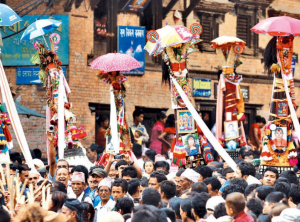
The festival begins on Bhadra Dwadsahi and ends on Ashwin Krishna Chaturdashi according to the lunar calendar. Therefore, it usually falls in September or October in the Gregorian calendar. During this time, the streets of Kathmandu come alive with chariot processions, masked dances, and religious rituals.
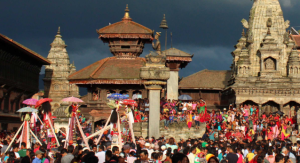
According to legend, Lord Indra once disguised himself as a mortal to collect the sacred parijata flower. However, local people caught him while he was picking the flower and imprisoned him.
To remember this story, an image of Indra with outstretched arms, tied like a thief, is displayed in city squares during the festival. Meanwhile, a white elephant — believed to be Indra’s vehicle — roams the streets searching for its master.
The legend also says that Indra’s mother came to Earth to secure his release. In return, she promised to bless the valley with fog and dew. She also assured that departed souls would safely reach heaven. The Dagini procession represents this powerful story of protection and blessing.
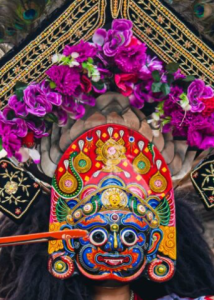
The Indra Jatra Festival in Nepal is famous for its traditional mask dances. Throughout the city, performers dressed as Lakhe, Bhairav, and other deities entertain both locals and visitors.
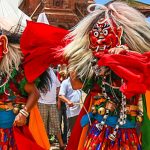
Among them, Bhairav, the fierce form of Lord Shiva, receives special worship during the celebration. These dances not only entertain but also preserve centuries-old Newari culture and tradition.
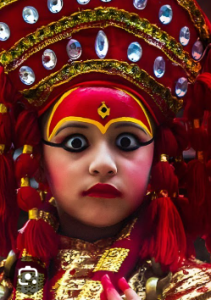
One of the main highlights of the Indra Jatra Festival in Nepal is Kumari Jatra. During this grand procession, the living goddess Kumari is taken through the streets in a beautifully decorated chariot.
She is accompanied by chariots of Bhairav and Ganesh. Thousands of devotees gather to receive her blessings. This sacred event beautifully reflects the deep spiritual and cultural identity of Kathmandu Valley.
Indra Jatra is more than a religious festival. It is a celebration of faith, history, art, and community spirit. Visitors can experience:
Ancient Newari traditions
Colorful mask dances
Sacred chariot processions
Unique living goddess culture
Authentic cultural heritage of Nepal
If you want to witness Nepal’s living traditions at their finest, the Indra Jatra Festival in Nepal offers an unforgettable cultural experience.
Outline Itinerary
Price Details.
For details regarding price, please email us at ehtours@explorehimalayatravel.com or make a booking through the booking link on this webpage.
Detail Itinerary.
On arrival at Kathmandu Airport, our representative will welcome you and transfer you to your hotel.
Rest of the day at leisure.
Indra Jatra officially begins on the twelfth day of the waxing moon in September with the ceremonial raising of the flag of Indra at Hanuman Dhoka, the old palace in Kathmandu.
The pole for the ceremony is carefully selected from the Sallaghari forest, four miles east of Bhadgaon. After performing specific rites, the pine tree is brought to Bhadgaon. Days later, people from Thimi pull the pole to Tudikhel, the central parade ground of Kathmandu, and four days before the festival, it is moved to Durbar Square.
The pole-raising ceremony usually begins between 7–9 AM, at the auspicious time set by priests. Hundreds of people gather to witness the occasion. Accompanied by the sound of traditional musical bands, the heavy pole is slowly erected using bamboo and ropes.
Once raised, the banner of Indra is unfurled, featuring the moon, symbolizing intelligent planning, and the sun, representing courage. An image of Lord Indra, placed in a cage at the foot of the pole along with a golden elephant, becomes the focus of offerings such as flowers, marking the official start of Indra Jatra.
On the same day, hundreds of people take to the streets of Kathmandu in the evening to honor their deceased family members. The procession moves through the old streets and shrines, with participants carrying butter lamps and offering lighted wicks in small clay dishes to shrines and relatives along the route. Some chant religious hymns while walking.
The procession lasts about three hours, serving as a meaningful tribute to ancestors and integrating spiritual rituals with the lively festival atmosphere.
Today, immerse yourself in Indra Jatra, one of Kathmandu’s largest and most historic festivals. This is the same festival during which King Prithvi Narayan Shah dethroned the Malla kings and established Kathmandu as his capital. The city comes alive with colorful mask dances, sacred rituals, and displays of Bhairav masks, the god of wrath, made from wood, brass, and stone, adorned with garlands and fine decorations.
Lakhey Dance: The Majipa Lakhey protects children and performs during the festival, originating from the legend of a demon who fell in love with a girl from Majipa and was granted residence by the King under the condition of safeguarding the city’s children.
Zawa Bhakku (Bhairav Dance): Dancers from Halchok perform as Bhairava in blue with two attendants in red, moving along the festival route and stopping at major squares to entertain devotees.
Pulu Kisi (Elephant Dance): From Kilagal Tole, this masked elephant, believed to carry Indra, roams the streets in search of its imprisoned master, delighting the crowd with playful antics, music, and torches.
Devi Dance: Also performed by the people of Kilagal, this dance accompanies the Kumari chariot procession, enacting the slaying of demons with dancers representing various deities.
Mahankali Dance: Performed by dancers from Bhaktapur, this dance features multiple acts and is showcased in Durbar Square and other major street squares.
Aakash Bhairab: Believed to be Kirati King Yalambar, whose head fell to Kathmandu in a battle described in the Mahabharata. The mask is revealed annually during Indra Jatra in Indrachok Temple, decorated with garlands.
Swet Bhairab (White Bhairab): A wrathful representation of Lord Shiva, whose pipe dispenses aila and rice beer (thon) as a blessing during the festival.
Indra Statue: Images of Lord Indra with bound hands are displayed on high scaffolds, commemorating the legend of Indra being captured while searching for the Parijat flower.
Each night, the palace squares and streets are filled with shrines, masks, dancers, and devotees, creating a spectacular celebration of Kathmandu’s rich culture, traditions, and heritage.
Today, witness the Kumari Jatra, the annual chariot procession of Goddess Kumari, the living goddess of Nepal. In this tradition, a pre-pubescent girl is worshiped as the manifestation of the divine female deity according to Hindu beliefs. The festival has been celebrated since the time of King Jaya Prakash Malla of Kantipur.
During the procession, Goddess Kumari, along with God Bhairav and God Ganesha in human form, is drawn through the streets of Kathmandu in elaborately decorated chariots. Thousands of devotees and tourists gather around Basantapur, Maru, Chikanmughal, Jaisidewal, and other areas along the route, filling the square in front of the Kumari House, temple steps, windows, balconies, and rooftops. The head of state and foreign dignitaries often witness the procession from the balcony of the old administration building.
The chariot pulling starts around 3 PM from Basantapur, passing through the southern part of the town called “Kwaneya” in the local Newari dialect, before returning to Basantapur, marking the end of the daytime chariot procession.
In the evening, followers of Vajrayana Buddhism and the Newar community offer butter lamps (Mata Biye) along the processional route as a mark of respect for deceased family members from the past year. The procession follows this extensive route:
Maru → Pyaphal → Yatkha → Nyata → Tengal → Nhyokha → Nhaikan Tole → Asan → Kel Tole → Indrachok → Makhan → Hanuman Dhoka → Maru → Chikanmughal → Jaisidewal → Lagan → Hyumata → Bhimsenthan → Maru.
After the Kumari returns home, a Newari performer masked as Dagin, the mother of Indra, emerges from the dark streets of Maru. According to legend, Dagin descended to earth to find her son and promised to bless the valley with fog, dew, and guide deceased souls to heaven. Families who lost a member in the past year follow the Dagin procession along the same route as the butter lamps.
Bau Mata represents holy snakes crafted from bamboo, adorned with rows of oil lamps, carried by members of the Manandhar caste group. The procession begins when Dagin returns from the upper town and moves along the festival route. Traditionally, the Dagin and Bau Mata processions never meet.
The route of Bau Mata follows:
Maru → Pyaphal → Yatkha → Nyata → Tengal → Nhyokha → Nhaikan Tole → Asan → Kel Tole → Indrachok → Makhan → Hanuman Dhoka → Maru → Chikanmughal → Jaisidewal → Lagan → Hyumata → Bhimsenthan → Maru.
Today marks the second day of the Kumari Jatra chariot festival. Like the previous day, Goddess Kumari, along with God Bhairav and God Ganesha, is pulled through the streets of Kathmandu in a grand chariot procession.
The procession route on this day is slightly different from Day 4:
Basantapur → Pyaphal → Yatkha → Nyata → Tengal → Nhyokha → Nhaikan Tole → Asan Tol → Kel Tole → Indra Chowk → Makhan → Basantapur.
Devotees and tourists line the streets to witness this spectagcular procession, offering prayers and enjoying the vibrant celebrations.
Pashupatinath Temple
Located 6 km (4 miles) from Kathmandu, Pashupatinath Temple is the holiest Hindu temple dedicated to Lord Shiva. Nestled amidst lush greenery on the banks of the Bagmati River, the multi-storied temple features a gilded roof and intricately carved silver doors. The main deity is Shiva in five-faced lingam form, revered as the god of destruction and a key figure of the Hindu Trinity.
Pashupatinath is the center of the annual Maha Shivaratri pilgrimage in February/March, when thousands of devotees and sadhus from Nepal and India gather for one day and night of worship. Behind the temple are the traditional Hindu cremation grounds, adding to its spiritual significance.
Boudhanath Stupa
Located 11 km (7 miles) from Kathmandu, Boudhanath Stupa is one of the largest and holiest Buddhist sites in Nepal. The stupa features four pairs of eyes looking in the four cardinal directions, symbolizing awareness and compassion. The squiggle between the eyes is the Sanskrit numeral one, representing the unity of all things.
Believed to have been built by King Man Deva on the advice of the goddess Mani Jogini, the stupa rests on an octagonal base surrounded by 108 images of meditational Buddha and copper prayer wheels inscribed with the mantra Om Mani Padme Hum.
Often called “Little Tibet”, Boudhanath is a center of Tibetan culture in Kathmandu, surrounded by monasteries and homes of Buddhist priests. It is a UNESCO World Heritage Site and a must-visit destination for travelers exploring Nepal.
PM: Rest of the day at leisure.
Free day for the activity of your choice
Today marks the final day of the eight-day Indra Jatra festival, known as Nanichaya. Originally a seven-day festival, it was extended by King Jaya Prakash Malla after one of his concubines at Kilagal Tole expressed regret at missing the Kumari procession. The last day is named in her honor.
Chariot Pulling of Goddess Kumari (Nanichaya):
On this day, the chariot procession of Goddess Kumari, accompanied by God Bhairav and God Ganesha, takes a special route through the streets of Kathmandu:
Basantapur → Pyaphal → Yatkha → Nyata → Kilagal → Bhedasing → Indra Chowk → Makhan → Basantapur
Devotees and visitors gather along the streets to witness the grand procession and offer prayers, marking the culmination of the festival.
Lowering of the Linga (Yosin Kothayegu):
The sacred Indra flag pole (Linga), erected at the start of the festival, is ceremonially lowered today. After religious rites, the moment the pole touches the ground, devotees rush forward to receive blessings. The pole is then carried to the Bagmati River near Pachali Bhairav Temple, where it is cut into pieces and used to feed the eternal sacred flame at the temple.
Breakfast at the hotel in Kathmandu
Leisure till departure
Our representative will escort you to the International Airport for onward destination.


