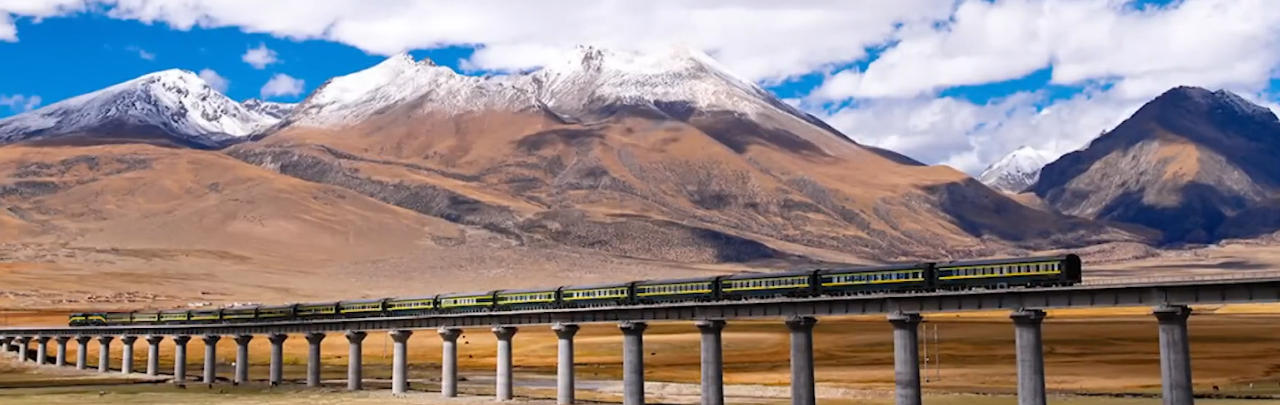
Embark on the world’s highest train journey from Beijing to Lhasa, crossing the legendary “Roof of the World.” The iconic Qinghai–Tibet Railway, also known as the Beijing–Lhasa Railway, is the highest railway on Earth.
The train climbs from 2,829 meters above sea level at Golmud (Geermu) to 3,650 meters at Lhasa. Remarkably, much of the railway is constructed on permafrost, showcasing one of the greatest engineering achievements of modern times.
Its highest point is the breathtaking Tanggula Pass, reaching 5,072 meters (16,640 feet) above sea level.
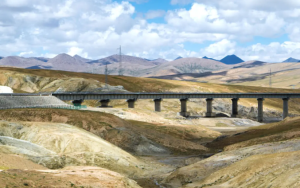
Because of the high elevation and reduced oxygen levels, all passenger coaches are:
Fully pressurized
Air-conditioned
Equipped with onboard oxygen supply
Therefore, travelers can comfortably enjoy this once-in-a-lifetime journey across the vast Tibetan Plateau.
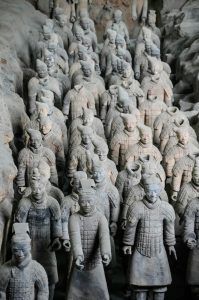
Before reaching Tibet, the journey includes a fascinating stop in Xian to visit the world-famous Terracotta Army.
This extraordinary archaeological site features thousands of life-sized clay soldiers, horses, and chariots buried with China’s first emperor. It remains one of the most significant discoveries of the 20th century and a UNESCO World Heritage Site.
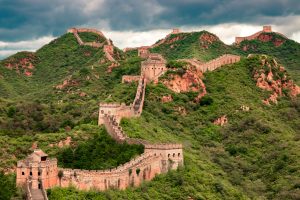
Your adventure also explores the historical treasures of Beijing, including:
The majestic Forbidden City
The legendary Great Wall of China
These iconic landmarks reflect China’s imperial grandeur and architectural brilliance.
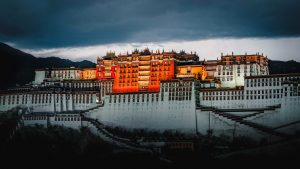
Tibet is a land of dramatic contrasts. From verdant forests to arid, moon-like landscapes shaped by the rain shadow of the northern Himalayas, the region remains as mysterious today as it was centuries ago.
Located at an average altitude of over 3,000 meters, Tibet offers:
Ancient monasteries
Unique Himalayan culture
Vast untouched landscapes
A timeless spiritual atmosphere
Despite modern accessibility, Tibet still preserves the essence of medieval heritage and carries a lingering aura of “Shangri-La.”
✔ Travel on the world’s highest railway
✔ Experience engineering marvels at extreme altitude
✔ Visit Xian’s Terracotta Warriors
✔ Explore Beijing’s Forbidden City & Great Wall
✔ Discover the mystical landscapes of Tibet
Outline Itinerary
Price Details.
Detail Itinerary.
Upon arrival at the airport, you will be warmly welcomed by our office representatives, who will transfer you to your hotel in Kathmandu.
The rest of the day is at your leisure.
After breakfast, proceed for a sightseeing tour of the famous highlights of Kathmandu and complete the formalities to obtain your Tibet visa.
Pashupatinath Temple:
Located approximately 6 km (4 miles) from Kathmandu city, Pashupatinath Temple is the holiest Hindu temple dedicated to Lord Shiva. Set amidst a lush green natural environment on the banks of the sacred Bagmati River, this multi-storied temple features a gilded roof and intricately carved silver doors.
The main deity is a five-faced Shiva in the form of a lingam. Lord Shiva is revered as the god of destruction and holds a significant place in the Hindu Trinity.
Pashupatinath is also the center of an important annual pilgrimage during Maha Shivaratri, which falls in February or March. On this occasion, thousands of devotees and sadhus from Nepal and India gather to worship Lord Shiva. The festival is observed for one full day and night. Behind the temple lie the traditional Hindu cremation grounds.
Boudhanath Stupa:
Situated about 11 km (7 miles) from Kathmandu city, Boudhanath Stupa is one of the largest and most sacred Buddhist sites in Nepal. The stupa features four pairs of eyes facing the cardinal directions, symbolizing awareness and vigilance. The symbol between the eyes represents the Sanskrit numeral “one,” signifying unity.
Believed to have been built by King Man Deva under the guidance of the goddess Mani Jogini, the stupa stands on an octagonal base. Surrounding the structure are prayer wheels inscribed with the Tibetan mantra “Om Mani Padme Hum,” and a base adorned with 108 images of the meditating Buddha.
Often referred to as “Little Tibet,” Boudhanath remains one of the best places in the Kathmandu Valley to observe traditional Tibetan culture. The area is surrounded by monasteries and homes of lamas (Buddhist priests), making it a focal point of Tibetan Buddhism in Nepal. The stupa is also a UNESCO World Heritage Site and a must-visit destination.
Obtain Tibet Visa.
The rest of the day is at your leisure.
Fly to Lhasa (3,660 m). Upon arrival at Gonggar Airport, enjoy a scenic drive of approximately 93 km (about 1 hour) to Lhasa city. After checking in at your hotel, you are advised to rest and take it easy for the remainder of the day. Drink plenty of fluids and allow your body to acclimatize to the high altitude.
Note: No fixed program is arranged for today.
Lhasa:
Lhasa has long been the cultural, political, and economic center of Tibet. Situated on the northern bank of the Lhasa River—a tributary of the Yarlung Tsangpo River—the city lies at an altitude of approximately 3,660 meters (12,008 feet). Covering an area of about 544 square kilometers, Lhasa is the capital of the Tibet Autonomous Region and boasts a rich history spanning over 1,300 years. It remains deeply synonymous with Tibetan culture, spirituality, and heritage.
Key attractions in Lhasa include the magnificent Potala Palace, the former winter residence of the Dalai Lama; Norbulingka, the traditional summer palace; and the sacred Jokhang Temple, considered the spiritual heart of Tibet. Other important monastic sites include Sera Monastery and Drepung Monastery.
A visit to the Barkhor Street—the traditional circumambulation circuit around Jokhang Temple—offers a vibrant and immersive cultural experience. The area is lined with bustling shops and street vendors selling a variety of traditional items, from prayer flags to unique Tibetan artifacts, making it one of the most memorable highlights of a visit to Tibet.
Morning: Breakfast at the hotel. An experienced guide will accompany you on a full-day sightseeing tour.
Sera Monastery:
Located about 5 km north of central Lhasa, Sera Monastery is one of the most important monasteries of the Gelugpa sect of Tibetan Buddhism. Founded in 1419, it once housed over 5,000 monks at the height of its prominence, though today the number has reduced to a few hundred.
Sera Monastery is also known as a “university monastery,” offering extensive teachings in Buddhist philosophy through its various colleges. The best time to visit is in the morning when the monastery is most active. A highlight is the famous monk debates held in the courtyard between 3:00 PM and 4:00 PM (except weekends), where monks engage in lively philosophical discussions.
Jokhang Temple & Barkhor Square:
Situated about 2 km east of the Potala Palace, Jokhang Temple is the holiest and most active Buddhist temple in Tibet. Built in 647 AD by the great Tibetan king Songtsen Gampo, the temple was originally constructed to house a sacred Buddha image brought from Nepal by his queen, Princess Bhrikuti.
Another revered image, the Jowo Shakyamuni statue—brought by the king’s Chinese consort, Princess Wencheng—later became the temple’s central focus. The name “Jokhang” translates to “Chapel of the Jowo,” reflecting its deep spiritual significance.
Surrounding the temple is Barkhor Street, a lively pilgrimage circuit and traditional market. The bustling bazaar, filled with pilgrims, shops selling ritual objects, and vibrant street life, offers a unique glimpse into Tibetan culture. The energy and devotion found here truly represent the spiritual heart of Tibet.


