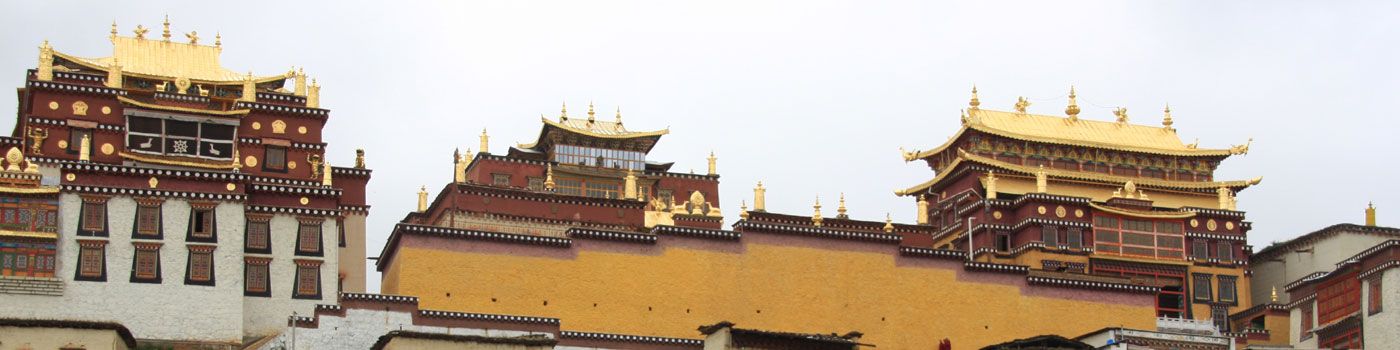
Start your 4 Nights 5 Days Lhasa Tour in the vibrant city of Lhasa, Tibet, famously known as the “Roof of the World.” This journey combines cultural exploration, spiritual discovery, and breathtaking Himalayan landscapes, making it ideal for travelers seeking both adventure and insight into Tibetan heritage.
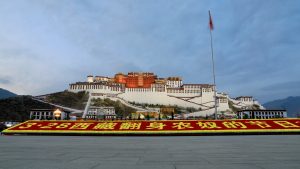
During this 4 Nights 5 Days Lhasa Tour, visit Lhasa, the center of Tibetan Buddhist life for over a thousand years. Discover its ancient monasteries and temples that form the backbone of Tibetan culture and religion. Key sites include:
Potala Palace – The iconic palace dominates Lhasa’s skyline and serves as a symbol of Tibetan history and devotion (Learn more about Potala Palace).
Jokhang Temple – Tibet’s holiest temple and a UNESCO World Heritage Site.
Drepung Monastery – Once the world’s largest monastery, rich in spiritual traditions.
Sera Monastery – Famous for lively monk debates and monastic education.
These sites offer visitors deep insight into Tibetan Buddhist philosophy, rituals, and daily monastic life.
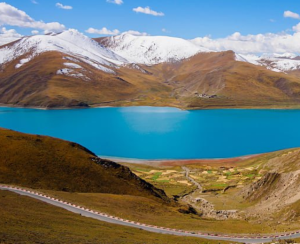
The journey continues beyond Lhasa to Yamdrok Tso Lake, one of Tibet’s most stunning freshwater lakes. Surrounded by snow-capped mountains and fed by glacial streams, the lake’s turquoise waters are sacred to locals. This stop is a highlight of the Lhasa Tour, offering spectacular photography opportunities and serene natural beauty.
A 4 Nights 5 Days Lhasa Tour perfectly blends culture, history, and nature. From ancient monasteries in Lhasa to the spiritual waters of Yamdrok Tso Lake, travelers experience Tibet’s profound spirituality and dramatic Himalayan scenery. For a detailed itinerary, contact us to plan your unforgettable journey today.
Outline Itinerary
Price Details.
For more information on price, please email us at ehtours@explorehimalayatravel.com or alternatively, you can make a booking from the booking link on this webpage and we shall revert to you soon thereafter!
Detail Itinerary.
It takes approximately one hour to reach Lhasa’s old city. Upon arrival and check-in at your hotel, you are advised to rest and take it easy. Due to Lhasa’s high altitude, it is important to drink plenty of fluids and allow your body time to acclimatize.
Note: No fixed sightseeing program is arranged for today to ensure proper altitude adaptation and comfort.
Lhasa has long been the cultural, political, and economic center of Tibet. The city lies on the north bank of the Lhasa River, a tributary of the Yarlung Tsangpo River, at an average altitude of around 3,600–3,700 meters above sea level. Covering an area of approximately 544 square kilometers, Lhasa is the capital of the Tibet Autonomous Region.
With a history spanning over 13 centuries, Lhasa is synonymous with Tibetan culture, spirituality, and heritage, making it one of the most important pilgrimage destinations in the Himalayan region.
Lhasa is home to some of Tibet’s most iconic landmarks, including:
Potala Palace – The symbol of Tibetan identity
Norbulingka Palace – Summer residence of the Dalai Lama
Jokhang Temple – The holiest temple in Tibetan Buddhism
Sera Monastery and Drepung Monastery – Renowned monastic universities
One of the most memorable experiences in Lhasa is walking the Barkhor circumambulation circuit surrounding the Jokhang Temple. The lively atmosphere, continuous flow of pilgrims, countless shops, and roadside vendors selling everything from prayer flags to traditional Tibetan artifacts offer a truly authentic glimpse into daily life in Tibet.
AM: Breakfast at the hotel. After breakfast, an experienced local guide will accompany you on a full-day tour of Lhasa’s most sacred monasteries and cultural landmarks.
Sera Monastery is one of the most important monasteries of the Gelugpa (Yellow Hat) sect of Tibetan Buddhism and is often referred to as a “University Monastery.” Located about 5 km north of central Lhasa, the monastery was founded in 1419.
At its peak, Sera Monastery was home to nearly 5,000 monks, though today the resident population has reduced to a few hundred. Like Drepung Monastery, Sera houses several monastic colleges dedicated to the study of Buddhist philosophy, logic, and scriptures.
The highlight of a visit is the monks’ debate session held in the open-air debating courtyard, where monks engage in lively philosophical discussions using ritual hand claps and gestures.
Best time to visit: Morning for monastery activities
Debate time: 3:00 PM – 4:00 PM (weekdays only, not on weekends)
Norbulingka, meaning “Jewel Park,” is the summer palace of the Dalai Lama, set within a peaceful and beautifully landscaped garden in the western part of Lhasa. Completed in 1956, it is the largest man-made garden in Tibet and forms part of the UNESCO World Heritage Site.
The palace is famous for its well-preserved wall paintings, exquisite mandalas, and historic murals. One particularly notable mural depicts the history of Tibet and the lineage of the Dalai Lamas. The Dalai Lama resided here during his final years in Tibet, and the rooms remain preserved as they were when he left in 1959. Visitors can also view the vintage cars imported by the 13th Dalai Lama, offering a rare glimpse into modern Tibetan history.
Located about 2 km east of Potala Palace, the Jokhang Temple, built in 647 AD, is the holiest and most actively worshipped Buddhist temple in Tibet. It was founded by the great Tibetan King Songtsen Gampo to house a sacred Buddha image brought from Nepal by his Nepalese wife, Princess Bhrikuti.
Later, the revered image of Jowo Shakyamuni was brought to the temple by the king’s Chinese wife, Princess Wencheng. This image gives the temple its name and spiritual power, as Jokhang means “Chapel of the Jowo.”
Encircling the temple is the vibrant Barkhor Square, a traditional pilgrimage route and bustling marketplace. The medieval atmosphere, constant movement of pilgrims, spinning prayer wheels, and countless shops selling ritual objects and local handicrafts create one of the most authentic and memorable experiences in Tibet. This is where the true spiritual heartbeat of Tibet can be felt.
AM: Breakfast at the hotel. After breakfast, you will be accompanied by an experienced local guide for a full-day sightseeing tour of Lhasa’s most iconic landmarks.
The Potala Palace dominates the skyline of Lhasa and is visible from almost every part of the city. Originally, a royal structure existed here as early as 640 AD, while the present palace was constructed in the 17th century by the Fifth Dalai Lama. For centuries, it served as the winter residence of the Dalai Lamas and remains the most important symbol of Tibetan culture and identity.
Rising 117 meters high, with 13 storeys and over 1,000 rooms, the Potala Palace houses an extraordinary collection of Tibetan art, sacred relics, manuscripts, and historical treasures. Several sections of the palace have been converted into a museum and are open to visitors. The highlight is the central three-storey structure, where visitors can admire magnificent chapels, golden stupas, and grand prayer halls revered by pilgrims and tourists alike.
Located about 8 km west of central Lhasa, Drepung Monastery is one of the three great pillars of the traditional Tibetan state. Founded in 1416, it was once the largest monastery in Tibet, housing nearly 7,000 monks at its peak. Drepung belongs to the Gelugpa (Yellow Hat) sect of Tibetan Buddhism.
The monastery complex includes several colleges dedicated to the study of Buddhist philosophy, logic, and scriptures. A particularly fascinating experience is observing the monks’ debate sessions, where philosophical discussions are conducted with expressive gestures and ritual clapping.
Within the Drepung complex is the Ganden Palace, which served as the residence of the Dalai Lamas before the construction of the Potala Palace.
AM: Breakfast at the hotel. After breakfast, an experienced guide will accompany you on a full-day excursion.
Located about 100 km northeast of Lhasa, Yamdrok Tso Lake is one of Tibet’s three largest sacred lakes and a must-see natural wonder. Stretching over 72 km in length, the lake is renowned for its vivid turquoise waters, surrounded by snow-capped mountains and fed by numerous small streams.
A visit to Yamdrok Tso offers a perfect blend of breathtaking scenery and spiritual significance, making it an unforgettable stop on your Tibetan journey.
You will be transferred to the airport in time to catch your flight home.


